LGBT History Project

48M Visitors
2011 Founded
1 Prime Minister’s Award

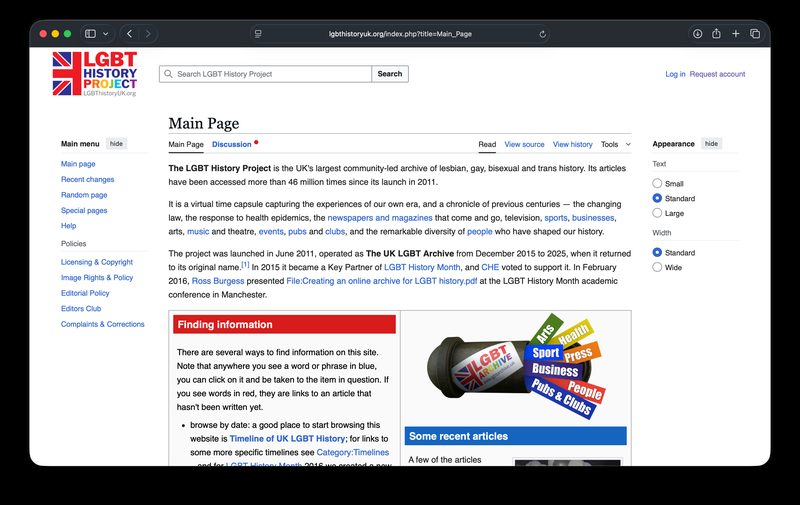
A volunteer-edited encyclopaedia of LGBTQ+ history, founded in May 2011 and archived at the British Library in October 2012. 48 million visitors. Awarded a Prime Minister’s Points of Light Award in February 2019 in recognition of its contribution to the preservation of community memory.

I am responsible for platform architecture, content migration, and the build of a custom AI agent for legal review of new articles—enabling the volunteer editorial team to publish with greater confidence and speed. I run the social media strategy, editor recruitment, and community governance for the project.

Nearmark—a GPS-based LGBTQ+ heritage walking tour platform—is being developed as part of the wider LGBT History Project ecosystem, taking the archive into the physical world.

Jonathan Harbourne receiving the Prime Minister's Points of Light award from Rt Hon Theresa May MP, February 2019
Receiving the Prime Minister’s Points of Light award from Rt Hon Theresa May MP, February 2019.
The LGBT History Project wiki at lgbthistoryuk.org

Nearmark

An open-source platform that gives any walkable place its own location-aware app—an arts trail, a heritage walk, a pub crawl, open gardens. Built on Vue 3, Supabase and Leaflet/OpenStreetMap; EU-hosted data; no API key billing. Self-host it free, or take a managed deployment. White-label for communities and cultural institutions.

The platform is designed for the people who maintain local heritage and community culture without institutional budgets—making the technology genuinely accessible rather than just theoretically open-source.

Rephoto

Photo alignment · Historical comparison · Before/after slider · Free tool

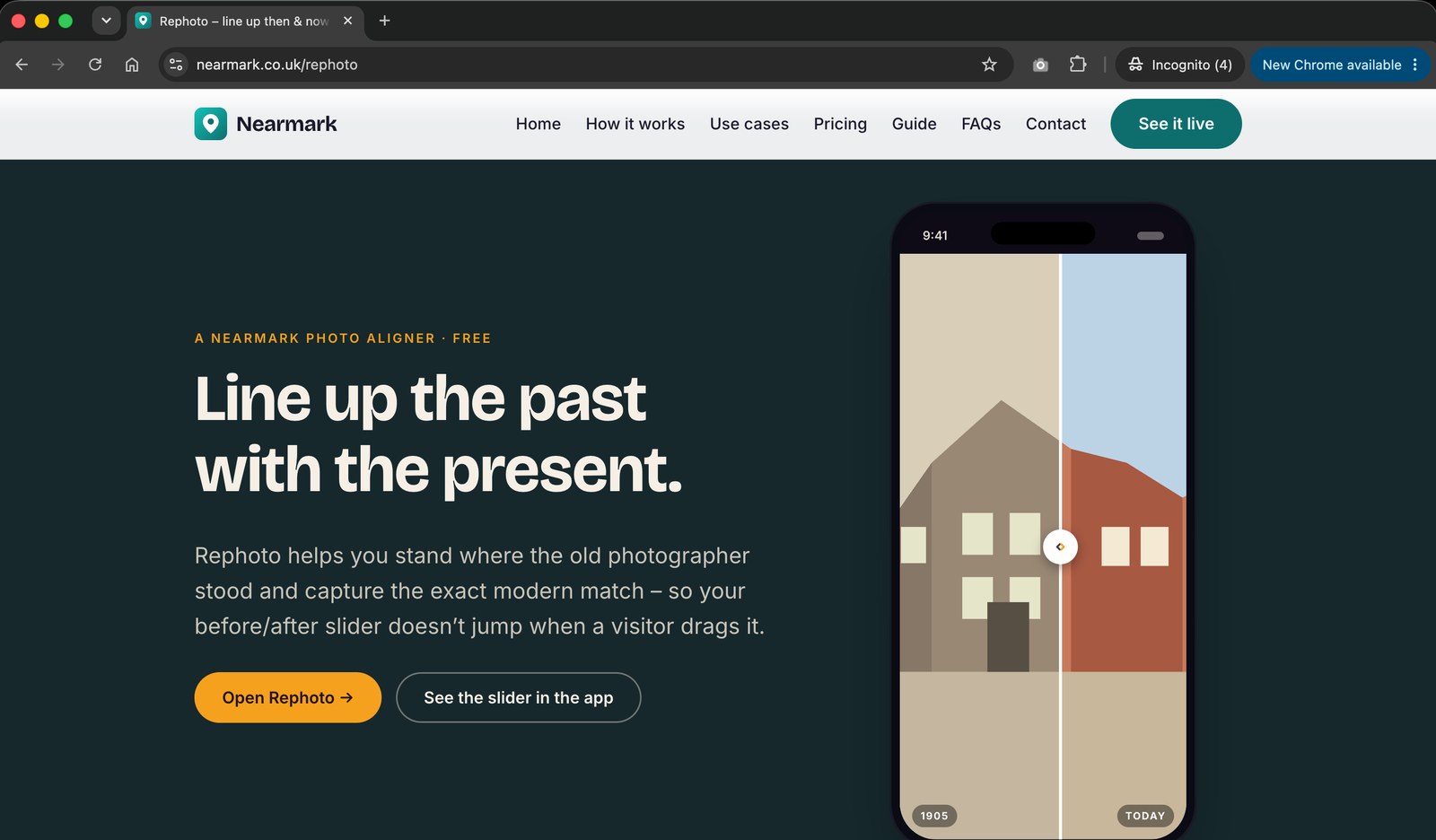
A free Nearmark tool for standing where the old photographer stood. Rephoto aligns a historical photograph with the live camera view so that a before/after comparison slider lines up exactly when a visitor drags it—without the jump that happens when images aren’t properly matched.

Tollesbury Arts Trail

Community heritage · Arts mapping · Essex · App Store · Google Play

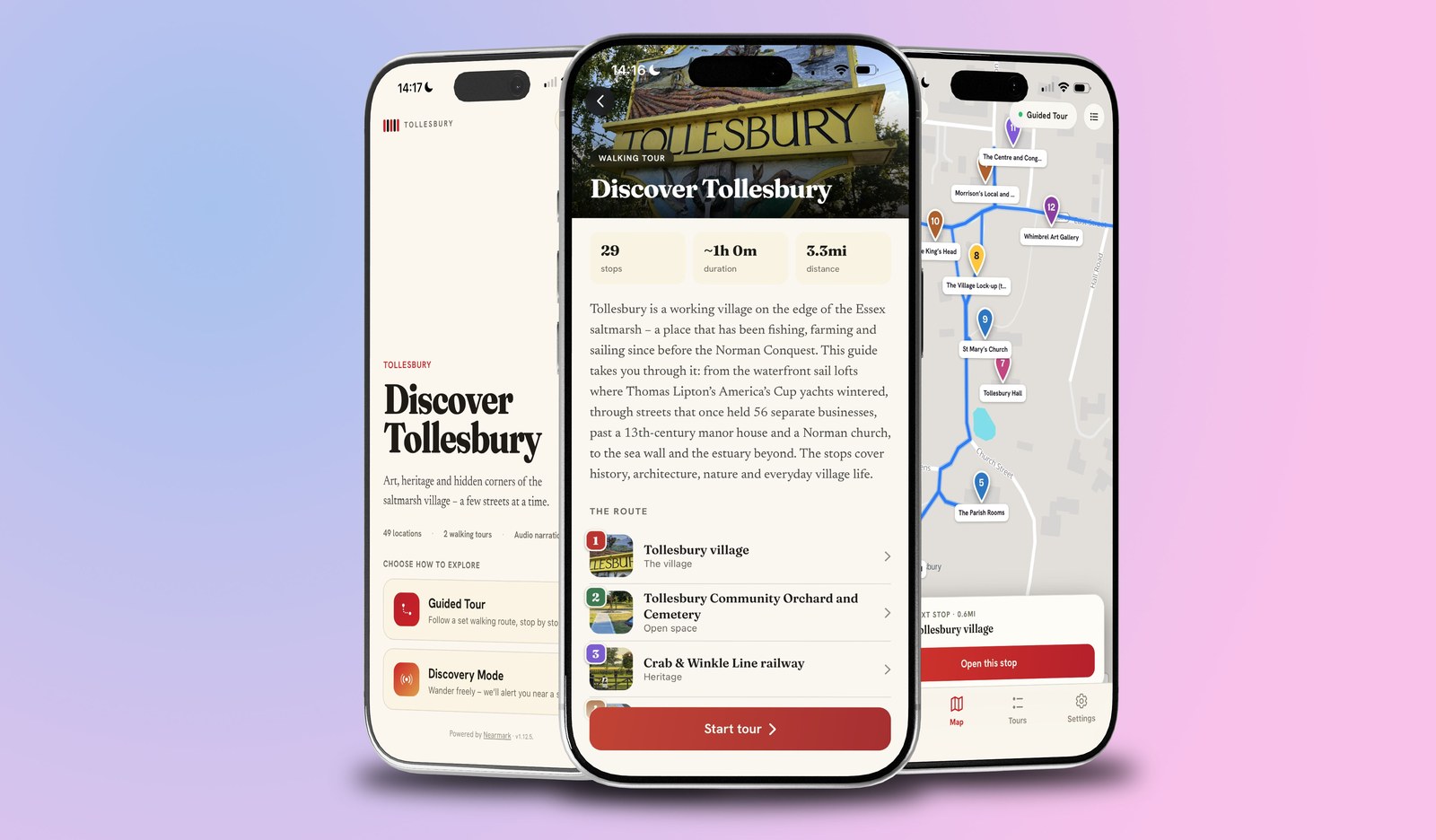
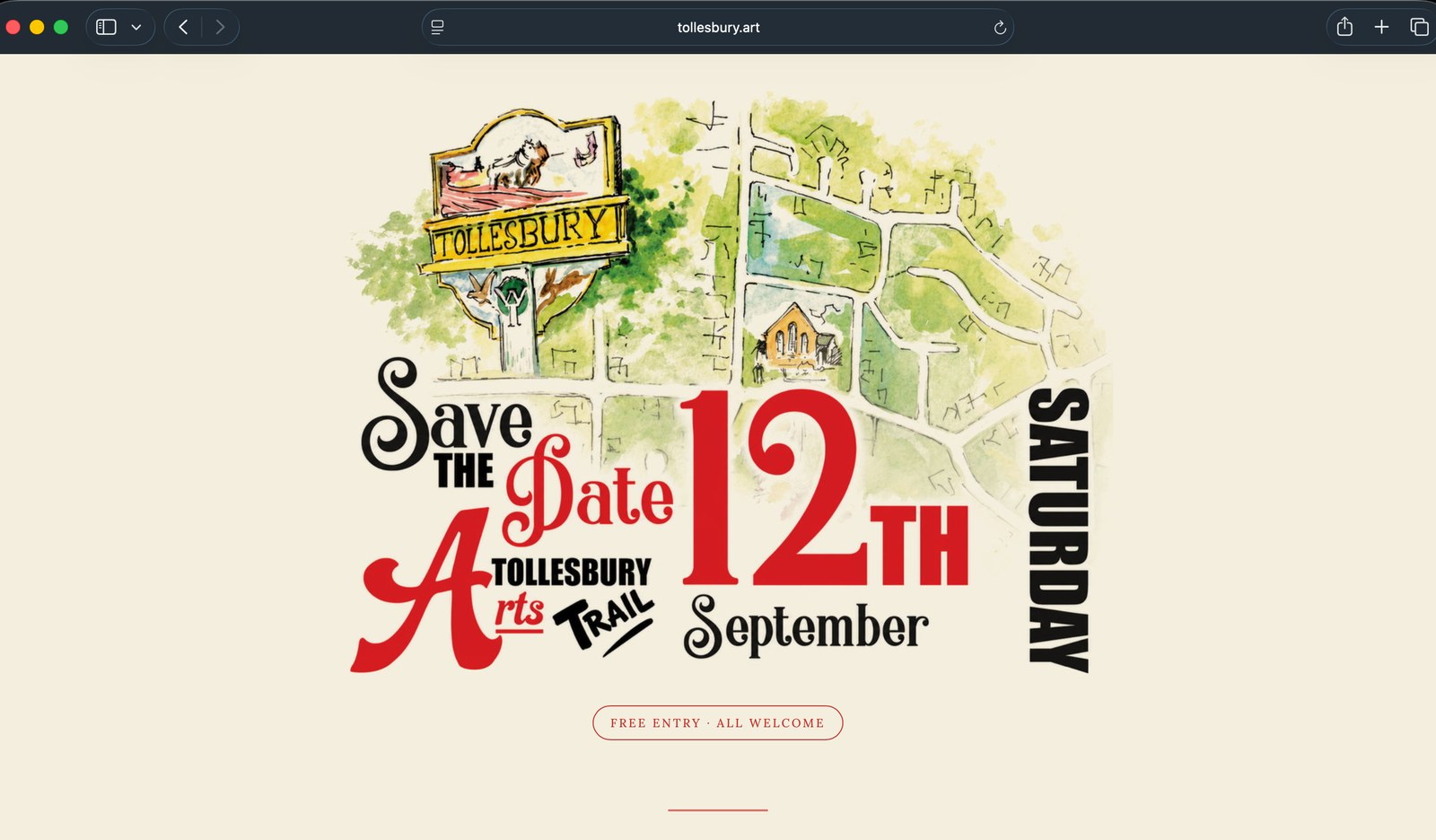
A community heritage and arts mapping app for Tollesbury, Essex. Built end to end: product vision, UX, development and launch across App Store and Google Play. A working demonstration of what the Nearmark platform can do for a small community with no technology budget.

LGBT Heritage App

GPS heritage tours · LGBTQ+ history · Open-source · White-label

A GPS-based LGBTQ+ heritage walking tour platform, developed as part of the LGBT History Project ecosystem. Open-source and white-label: available for communities, cultural institutions, and local authorities that want to map and share their own queer heritage.

Moxii

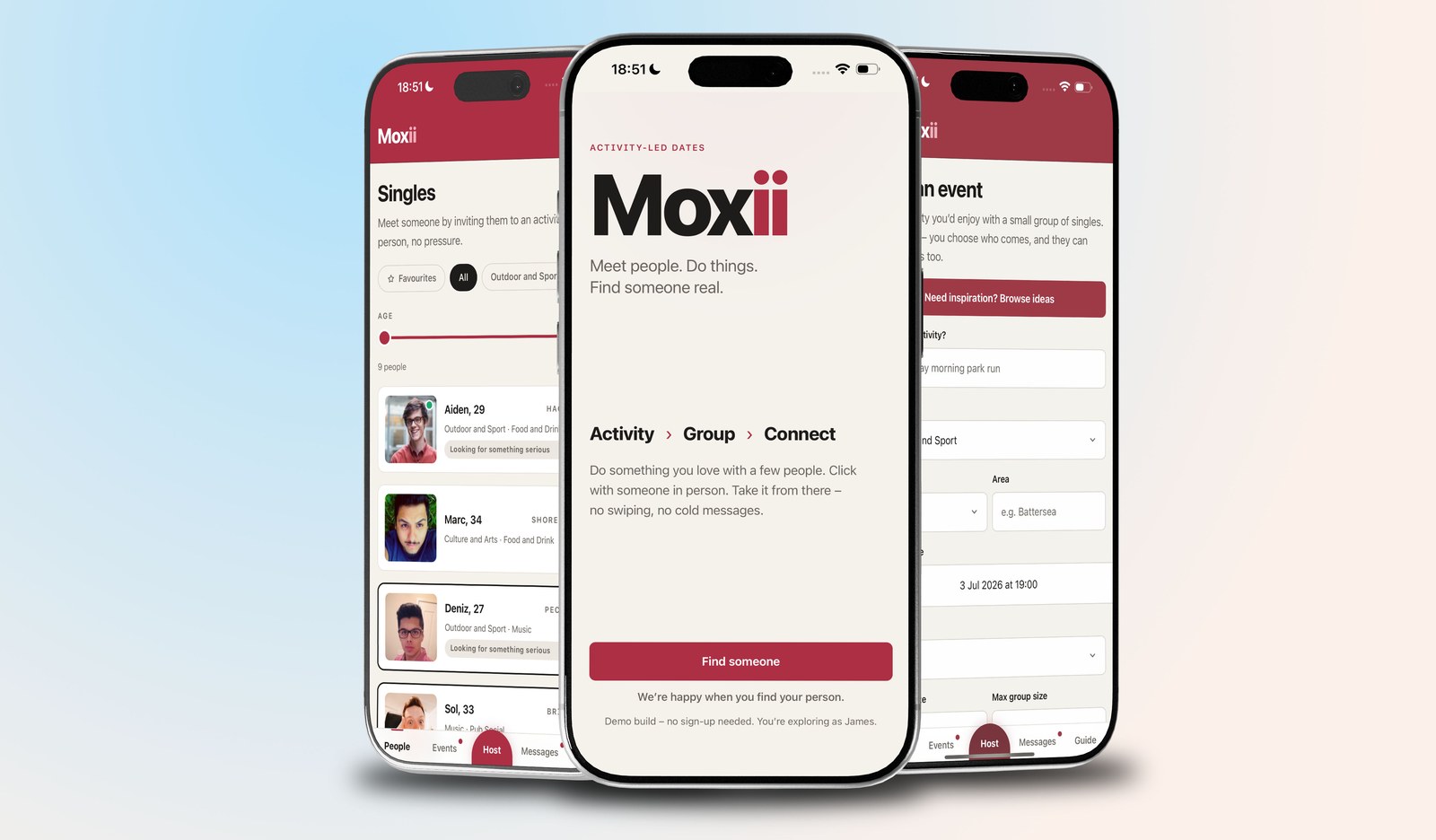
Most dating apps are built around the same assumption: keep people on the platform as long as possible. That is a business model, not a product philosophy—and it produces apps that are very good at generating engagement and very bad at helping people actually meet.

Moxii is a design investigation into how people form relationships in the real world, and what technology can do to support that process rather than replace it. The question driving the design is straightforward: what would a dating app look like if it were built around the moment two people decide to meet, rather than the moment they match?

The project serves as a portfolio piece demonstrating innovation in a crowded category—how first-principles thinking about a social problem leads to a product architecture that looks nothing like the incumbents. Talk to me about it.

Beyond Luminance

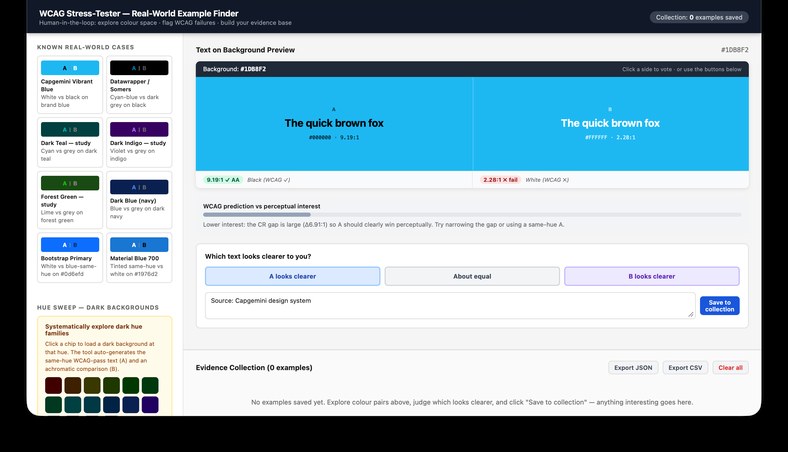
A research project examining where WCAG colour contrast requirements fail in practice—not because the maths is wrong, but because the standard was built on assumptions about perception that real-world design routinely violates. Most accessibility audits test luminance ratios and stop there. This project doesn’t.

The work is grounded in a purpose-built stress-testing tool that generates and evaluates colour combinations at the edges of WCAG compliance: combinations that pass the ratio but fail perceptually, and combinations that fail the ratio but read clearly. The data from that tool forms the empirical basis for a full academic paper, currently in preparation.

Try the WCAG Stress-Tester →